




In Dubai — a city of skyscrapers, luxury, and endless opportunities — Yulianna Anikeeva has created an oasis for those seeking meaning rather than mere entertainment. Her arthouse film club, born two years ago, has grown into a community of like-minded individuals where cinema sparks philosophical debates and strangers become close friends. How did a former oil and gas professional build a cultural project that changes lives? Why does auteur cinema remain relevant in an era of short attention spans? And what happens when people who’ve never heard of Lars von Trier attend a screening? In this interview, Yulianna shares how film bridges continents, teaches us to see the world through metaphors, and why Dubai needs Requiem for a Dream.

Tell us about yourself: How did you get into film, what inspires you, and what drives you?
Cinema has been with me all my life. At 16, I organized my first film festival in my hometown of Cherkasy, screening movies about the dangers of addiction, like Requiem for a Dream. Later, I studied at the New York Film Academy and the Kyiv University of Theater, Film, and Television, though financial struggles prevented me from graduating. I’ve always been inspired by directing: I analyzed auteurs’ biographies and dissected their styles. For me, film isn’t just a story — it’s a metaphor, a language spoken by the director. I’ve lived in Dubai for 14 years, where I launched an arthouse film club two years ago to fill a void I felt deeply.
How did the idea for the film club come about? What was the “spark”?
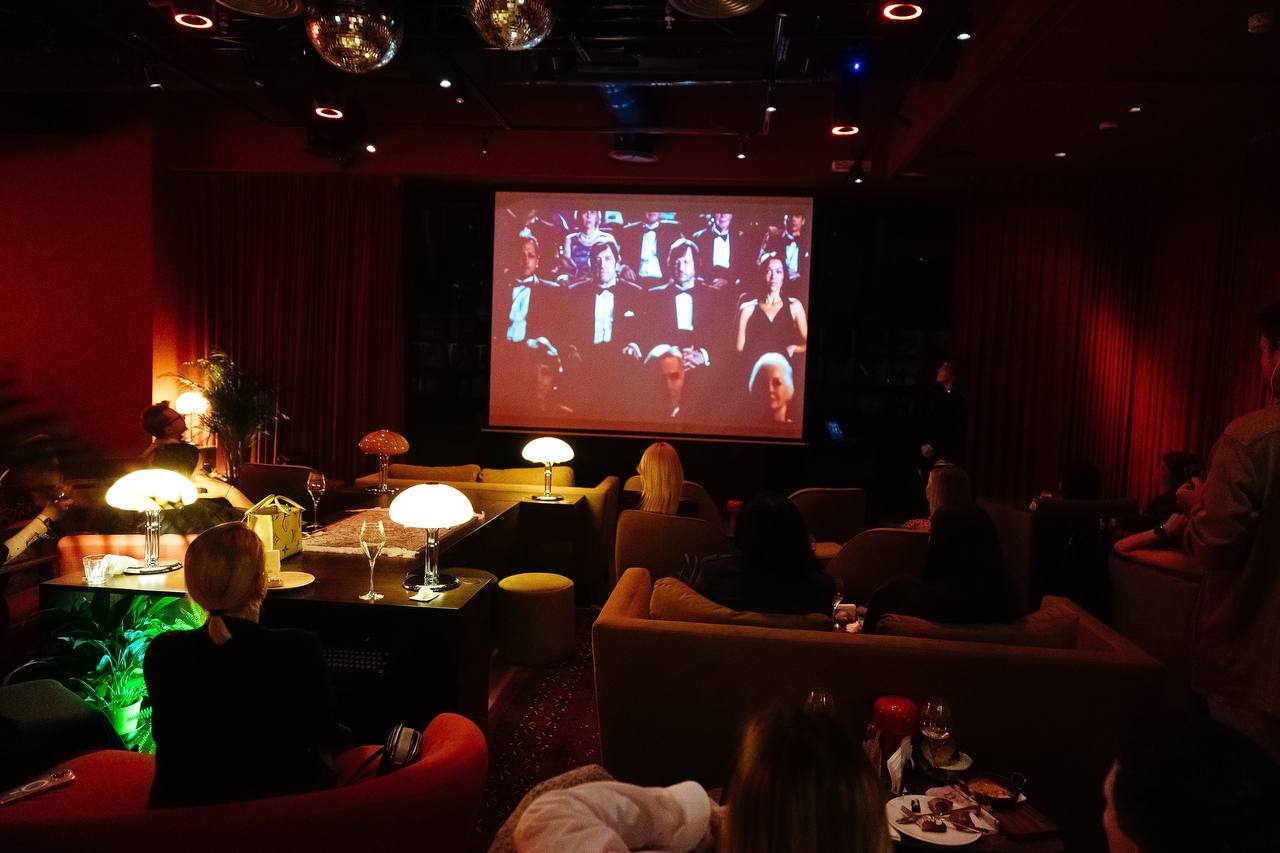
The spark ignited on my birthday, October 1, 2023. I announced our first screening on Instagram, and tickets sold out in 10 minutes. That was the sign: the project was needed. Before this, I spent 20 years in the oil and gas industry, but film always remained my lens for understanding the world. Dubai, for all its dynamism, lacked depth in conversation and philosophical exchange. That’s how the club began — it’s now a “film family” for many.
How do you define the value of arthouse cinema for modern audiences?
Arthouse cinema is like reading a book in two hours. It doesn’t give answers but asks questions, using metaphors and symbolism. It teaches critical thinking. For instance, our viewers now recognize the distinct styles of Lars von Trier and Jurgis Saltimuskas. Such films cultivate visual literacy and intellectual depth — vital in an age of mainstream content.
What was the biggest challenge in creating the club?
Believing that a passion could become my life’s work. I once saw cinema as “frivolous” compared to my corporate career. But when I saw people returning after screenings, sharing emotions, I realized: this is my mission. The energy of our audience gave me strength to keep going.
How does the club benefit people beyond art?
It’s a space where everyone is heard. There are no right or wrong opinions — only dialogue. People find friends, collaborators, even business partners. We host artist dinners, lectures, and networking nights. The club isn’t just about films; it’s a community where ideas bloom.
What role did Igor play in the project’s development?
Igor believed in me even when I doubted myself. After attending a screening, he said, “This is important work.” His support pushed me to build my personal brand and step into the spotlight. Now, we’re working to grow the club’s global recognition and establish my expertise as an international film critic.
Which films have influenced you most?
— Blow-Up by Michelangelo Antonioni: It showed me cinema isn’t what it seems.
— Mulholland Drive by David Lynch: Surrealism that alters your perception of reality.
— Lars von Trier’s films: His contradictions and intellectual depth.
— Classics: Bergman, Fellini, French New Wave. Godard’s Breathless, for example.
What are your future plans for the club?
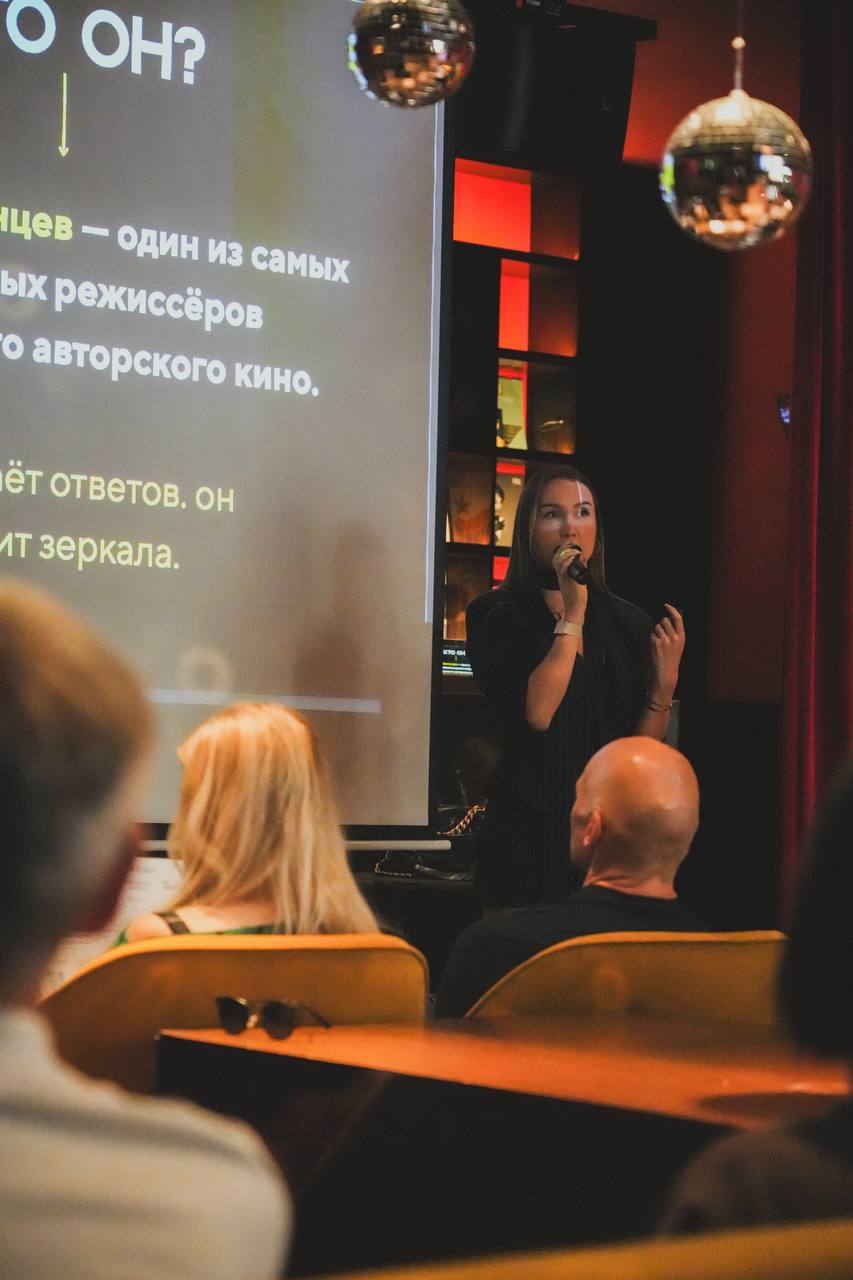
In five years, I envision a global franchise with screenings led by my methodology. I dream of a dedicated cinema-lecture hall and an arthouse film festival. We’re already expanding with artist dinners and art lectures. I want our “roof” to shelter everyone craving depth.
How do you feel about online screenings?
Content matters, not format. Digital access helps spread arthouse cinema, but the magic of a theater — the shared energy, post-screening debates — can’t be replaced by a smartphone screen.
Advice for new cultural projects?
Just start. If your project energizes you, the world needs it. Competition doesn’t exist — everyone has a unique voice. More cultural initiatives mean a richer society. Mistakes? They’re part of growth. Begin, even if you think everything’s been done.
What would you change if you could restart?
Nothing. Even hardships were stepping stones. Starting earlier might have meant less experience. I’m proud the project began when I was ready. Grateful to Dubai and our audience — we found each other.
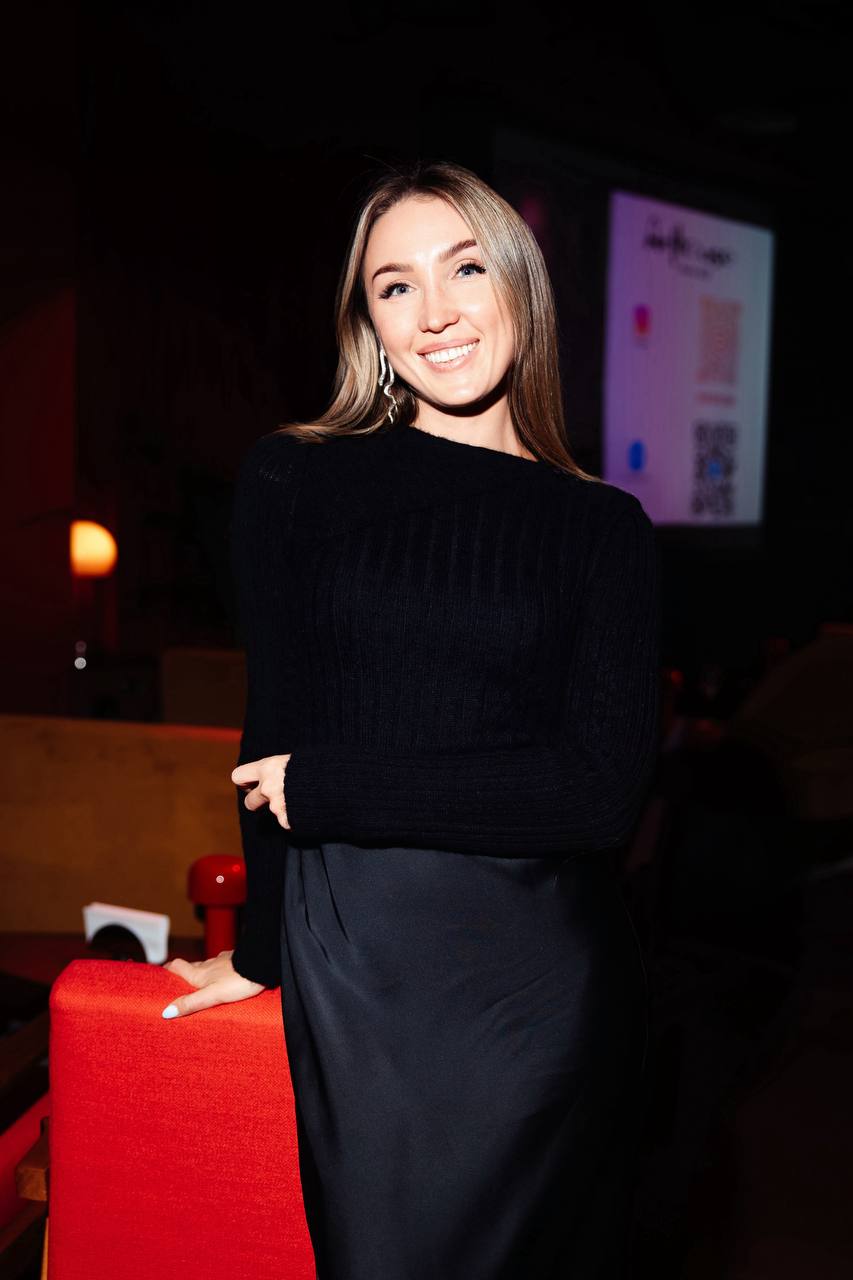
Yulianna Anikeeva’s story is about turning passion into a bridge between cultures. Her Dubai film club proves that even in the world’s fastest-paced city, there’s room for slow conversations, doubts, and seeking answers. Here, no one grades directors, debates budgets, or labels films “right” or “wrong.” Here, people learn to listen. And they believe that one day, arthouse cinema will emerge from the underground, and audiences worldwide will discuss not special effects, but the quiet revolution in their souls after the credits roll.
“Cinema isn’t about the screen,” Yulianna smiles. “It’s about the people in the audience. If even one viewer sees the world differently tomorrow — we’ve done our job.”