

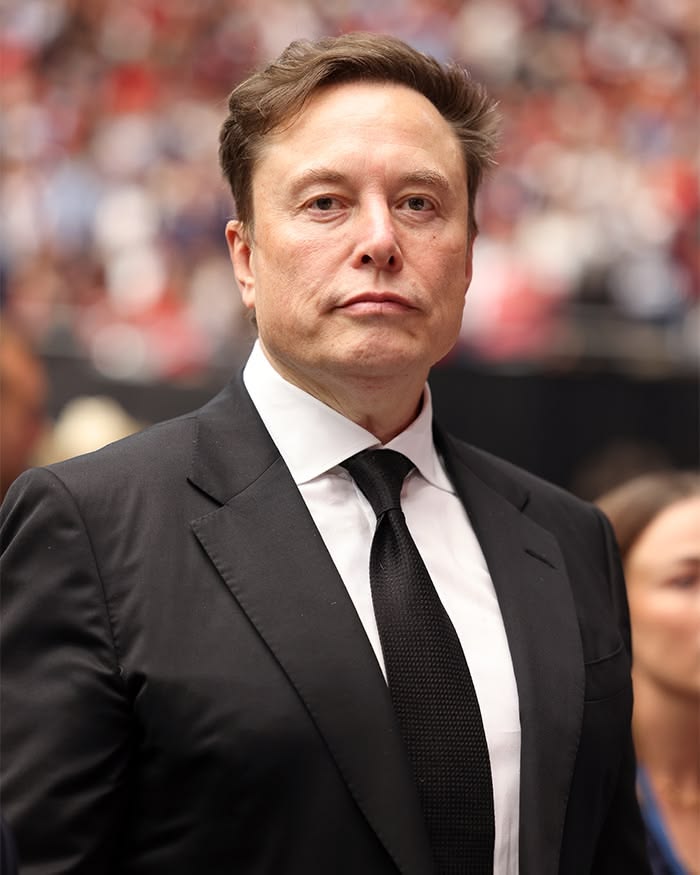

Elon Musk has become the subject of one of the most talked-about documentaries at this year’s Venice Film Festival.
Oscar-winning filmmaker Alex Gibney premiered his four-hour documentary Musk at the festival, where the film received a four-minute standing ovation after taking an expansive and highly critical look at the billionaire behind Tesla, SpaceX and X.
The documentary explores everything from Musk’s business mythology and ambitions for Mars to his family relationships and increasingly prominent role in American politics.
Musk did not participate in the production and has previously dismissed the project as a “hit piece,” but Gibney assembled interviews with people who have worked with, lived with and closely observed him over several decades.
A four-hour portrait of one of the world’s most powerful men
Gibney began working on Musk in 2023.
Since then, the story surrounding its subject has expanded dramatically.
Musk became increasingly involved in US politics, supported Donald Trump during the 2024 presidential election and later played a central role in the Department of Government Efficiency, commonly known as DOGE.
That changing political landscape contributed to the film becoming much larger than originally planned.
Gibney, whose previous documentaries have examined Enron, Scientology and political power, presents Musk not simply as the story of a technology entrepreneur but as an examination of how wealth, influence, mythology and political power can become interconnected.
Was Musk an inventor — or an exceptional investor?
One of the documentary’s central arguments challenges the popular image of Musk as a lone technological inventor.
The film instead suggests that one of his greatest abilities has been identifying ambitious companies and ideas, investing in them and then becoming inseparable from their public image.
Tesla co-founder Martin Eberhard appears in the documentary and discusses the widespread assumption that Musk founded Tesla himself.
Musk became the company’s largest investor early in its history and later its most recognisable public figure, but Tesla was originally founded by Eberhard and Marc Tarpenning.
The film examines how Musk’s personality and bold public promises have helped drive extraordinary attention towards businesses including Tesla and SpaceX.
At the same time, Gibney questions where visionary marketing ends and technological reality begins.
Tesla’s self-driving promises come under scrutiny
One of the film’s most serious sections examines Tesla’s Autopilot technology.
The documentary looks at accidents connected to vehicles operating with driver-assistance systems and argues that the terminology and public messaging around “self-driving” cars may have created unrealistic expectations among some drivers.
Footage from a fatal accident is included in the film, together with emergency calls and recordings from vehicle and police cameras.
The documentary’s wider argument is that Musk has repeatedly presented technologies as being closer to completion than critics believe they actually are.
For Gibney, that tension between future promises and present-day reality becomes one of the defining themes of the film.
The dream of living on Mars
The same question is applied to Musk’s most ambitious vision: building a human civilisation on Mars.
Through SpaceX, Musk has repeatedly spoken about creating a self-sustaining settlement on the planet and making humanity a multiplanetary species.
Musk takes a more sceptical view.
The documentary examines the extreme challenges humans would face on Mars, including radiation exposure, the lack of breathable oxygen and the enormous technological requirements necessary to sustain a permanent population.
Rather than dismissing space exploration itself, the film questions the timeline and certainty with which some of Musk’s predictions have been presented.
The result is one of the documentary’s larger philosophical questions: how much of Musk’s influence comes from building the future, and how much comes from convincing people that the future is closer than it really is?
His private life becomes part of the story
The documentary also moves away from Musk’s companies to examine his complicated personal relationships.
Among the interviewees is Justine Musk, his first wife and the mother of five of his children.
She reflects on their marriage, family dynamics and the death of their first child, Nevada, who died in infancy.
The film also discusses Musk’s relationship with his transgender daughter Vivian Jenna Wilson, who has publicly distanced herself from her father.
Justine describes a family relationship that became increasingly strained following Musk’s public comments about Vivian.
These interviews give the documentary a more intimate dimension, moving beyond the familiar public image of Musk as a billionaire entrepreneur and examining the personal consequences of his behaviour through the perspectives of those closest to him.
Ashley St. Clair speaks publicly about their relationship
Another major interview comes from Ashley St. Clair, who has said that she and Musk had a child together.
St. Clair attended the Venice premiere and press conference and explained that she was able to participate in the documentary after refusing to sign a proposed confidentiality agreement.
In the film, she discusses the beginning of their relationship, Musk’s fascination with population decline and his frequently stated belief that highly intelligent people should have more children.
The documentary uses her story as part of a broader examination of Musk’s views on reproduction and population growth.
Musk is known to have fathered numerous children across several relationships, and his concern over declining birth rates has repeatedly appeared in his public statements.
Elon Musk’s father gives a rare interview
One of the documentary’s most unexpected appearances comes from Errol Musk, Elon’s father.
He discusses his son’s childhood in South Africa, including severe bullying at school and Elon’s early obsession with comic books and technology.
The film also touches on allegations made against Errol Musk by family members, which he denies.
Despite the documentary’s highly critical portrait of his son, Errol ends his appearance with a striking warning: people should be careful about betting against Elon Musk.
That statement captures one of the contradictions running throughout Gibney’s film.
Even many of Musk’s critics acknowledge his unusual ability to survive controversy, take enormous risks and repeatedly emerge at the centre of the next major technological or political conversation.
The documentary examines Musk’s political transformation
The final major chapter focuses on Musk’s movement towards the American political right.
The documentary traces part of that shift back to the Covid-19 pandemic, when government restrictions forced Tesla factories to temporarily suspend operations.
His acquisition of Twitter — later renamed X — became another important turning point.
Musk positioned the purchase as a defence of free speech while becoming increasingly vocal on political and cultural issues.
By the 2024 US presidential election, his political role had become far more explicit as he publicly backed Donald Trump.
Musk explores the relationship between that political support and the extensive regulatory environment surrounding Tesla, SpaceX and Musk’s other companies.
Several interviewees in the documentary offer their own theories about why the relationship developed, while Gibney examines how political influence and corporate interests can increasingly overlap when one individual controls companies operating across transportation, satellites, artificial intelligence and communications.
The film also raises questions about data and AI
The documentary moves further into political territory when examining Musk’s involvement with DOGE.
It explores concerns over the amount of government data potentially accessible through the initiative and asks how artificial intelligence could theoretically be used alongside large-scale personal datasets.
AI pioneer Geoffrey Hinton, often described as one of the “godfathers of AI,” appears in the film to discuss those risks.
The documentary presents the issue as part of a larger question surrounding Musk’s influence: few private individuals have simultaneously held such significant roles across technology, communications, space infrastructure, artificial intelligence and politics.
Musk himself did not participate
Despite the extensive list of interviewees, Musk declined to take part in the film.
Instead, Gibney uses archival footage, interviews and even an AI-generated representation of Musk throughout the documentary.
The director has described the film as an attempt to reconsider the mythology surrounding one of the most famous entrepreneurs of the 21st century.
Musk, however, has rejected the project without seeing it, publicly characterising it as an attack.
That tension is likely to follow the documentary well beyond Venice.
From Venice to cinemas and HBO Max
After its Venice premiere, Musk is scheduled to arrive in US cinemas on October 16 through Bleecker Street before eventually becoming available on HBO Max.
The documentary is likely to generate intense debate.
Musk remains one of the most polarising figures in global culture — celebrated by supporters as a visionary responsible for transforming electric vehicles and commercial space travel, and criticised by others over his management style, political influence and public statements.
Gibney’s film clearly approaches that story from a critical perspective.
But after four hours examining the businesses, relationships, ambitions and controversies surrounding Elon Musk, its central question may be larger than whether audiences admire or dislike him.
It asks how one individual accumulated enough wealth, technology and cultural influence to become almost impossible to separate from the future he constantly promises to build.