

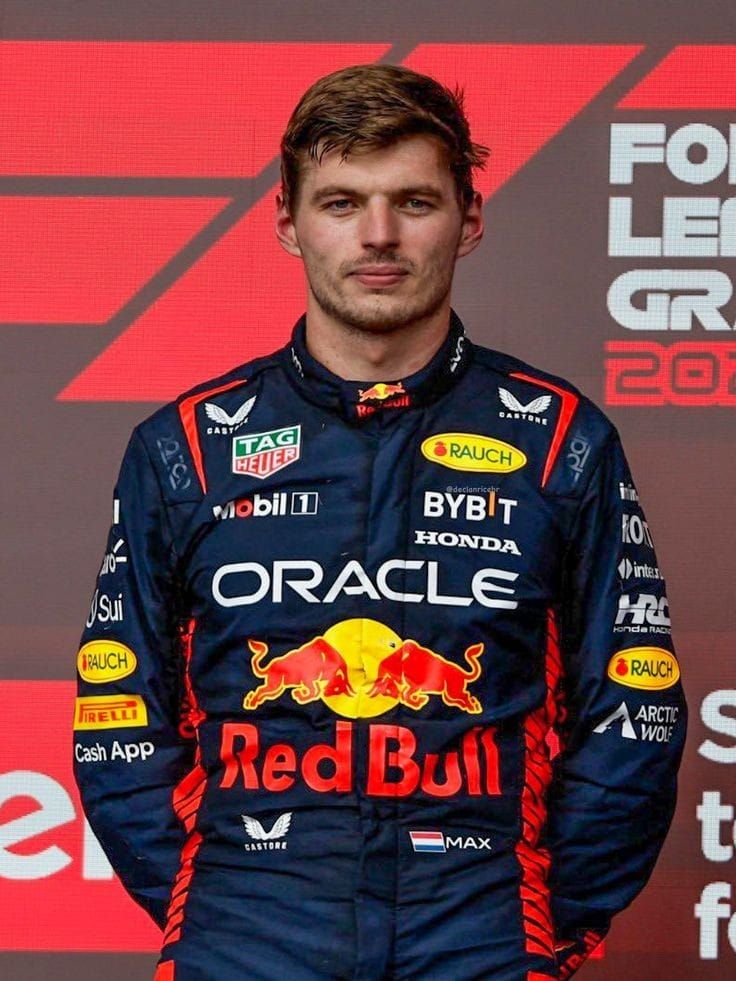

Max Verstappen has ended months of speculation about his Formula One future by signing a new contract with Red Bull Racing, extending his stay with the team until the end of the 2030 season.
The four-time world champion had been linked with potential moves to McLaren and Mercedes, but the new agreement confirms that one of Formula One’s most successful driver-team partnerships will continue for several more years.
Verstappen chooses continuity
The 28-year-old had previously been under contract until 2028, but clauses in that agreement reportedly gave him the option to leave at the end of the current season.
Instead, Verstappen has chosen to remain with the team where he has spent virtually his entire Formula One career.
He described Red Bull as a “second family” and said his goal remains clear: to help the team return to the top.
The decision removes one of the biggest uncertainties surrounding the Formula One driver market.
A partnership that defined an era
Verstappen joined Red Bull’s senior team in 2016 and quickly became one of the defining drivers of his generation.
Since then, he has won four Formula One World Championships and 71 Grands Prix for the team.
That total places him third on the all-time Formula One victories list, behind only Lewis Hamilton and Michael Schumacher.
Few modern driver-team combinations have achieved the level of success Verstappen and Red Bull have produced together.
Red Bull faces a difficult 2026 season
The timing of the new contract is particularly significant because Red Bull has endured a challenging start to the 2026 campaign.
Verstappen’s best results so far this season have been two second-place finishes, achieved at the Austrian and Hungarian Grands Prix.
The Dutchman also entered 2026 after losing last year’s world championship to McLaren’s Lando Norris, ending his run of consecutive titles.
That shift in competitive balance had helped fuel speculation that Verstappen could consider moving to a rival team.
His new agreement shows that, for now, he remains committed to rebuilding Red Bull’s position at the front of the grid.
The 2030 deal spans a new F1 era
The extension also carries strategic importance because it takes Verstappen into the next major regulatory cycle in Formula One.
The sport has introduced significant changes to its power-unit regulations, and Verstappen has been openly critical of some aspects of the new technical direction.
By committing through 2030, however, he is effectively choosing to navigate that new era with Red Bull.
That gives both driver and team long-term stability at a moment when Formula One is entering another period of major technical transformation.
Red Bull calls Verstappen the best on the grid
Team principal Laurent Mekies welcomed the extension, describing Verstappen’s decision as a major victory for Red Bull.
He praised the Dutchman’s competitiveness, determination and willingness to challenge convention — qualities that have become closely associated with both Verstappen and the Red Bull brand.
Keeping him also gives the team a clear centrepiece around which to build its future technical and sporting strategy.
A symbolic announcement before Zandvoort
The timing of the announcement adds another emotional layer.
The new contract was confirmed ahead of Verstappen’s final home race at Zandvoort, before the Dutch Grand Prix disappears from the Formula One calendar.
For Verstappen, who has become a national sporting icon in the Netherlands, the weekend already carries extra significance.
Now it also marks the beginning of another long-term chapter with Red Bull.
The Verstappen era continues
For months, the Formula One paddock had been filled with questions about whether Verstappen might leave Red Bull for a new challenge.
Those questions have now been answered.
Despite a difficult season, changing regulations and increased competition from McLaren and Mercedes, Verstappen has chosen stability over a dramatic transfer.
His new contract keeps him at Red Bull until 2030 and extends one of the most successful partnerships in modern Formula One.
The next objective is simple: turn that commitment into another championship-winning era.